Landscape
The landscape of Extremadura is best described as gently rolling countryside, in which three main landscape types can be distinguished: steppes, dehesas and mountain ranges.
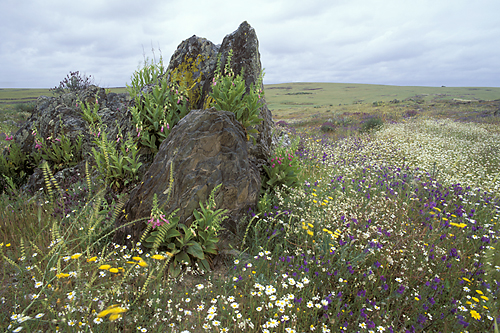
The steppes consist of endlessly rolling plains covered with grasses and herbs. Thanks to their vast scale and tranquillity, these areas support many remarkable bird species, including little and great bustard, quail, stone-curlew, black-bellied and pin-tailed sandgrouse, collared pratincole, Montagu’s harrier, European roller, southern grey shrike and calandra lark.
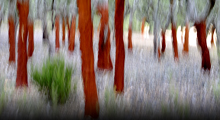
Dehesas (wooded pastures) are extensive open woodlands of holm oak and cork oak, with the trees spaced widely apart. There is usually little or no undergrowth. Dehesas provide important breeding habitat for species such as black vulture and Spanish imperial eagle, and they are of great importance for wintering common cranes.
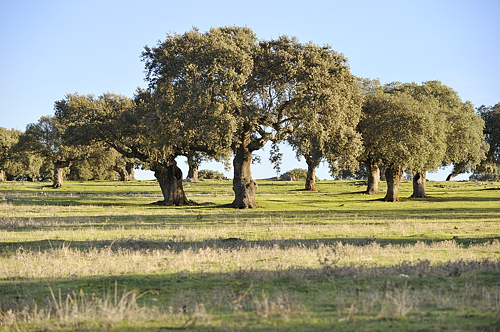
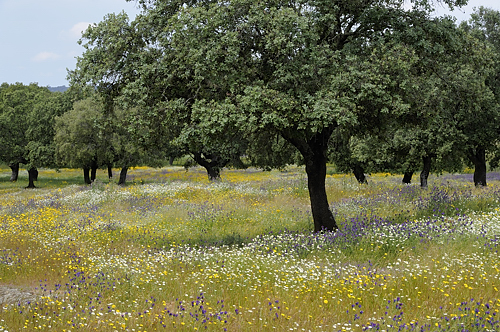
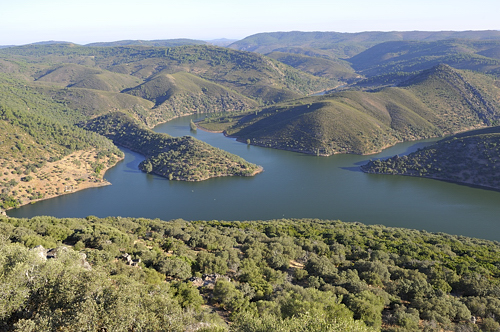
The landscape is crossed by several major rivers, including the Tagus and the Guadiana. To the north, Extremadura is bordered by the Sierra de Gredos, with peaks rising to over 2,500 metres. Several other interesting mountain ranges run through Extremadura itself, such as the Sierra de San Pedro and Las Villuercas. To the south, Extremadura is bordered by the Sierra Morena.
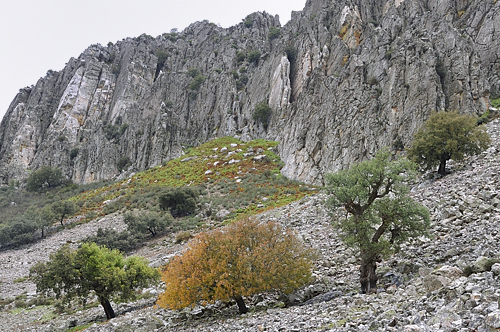
Monfragüe National Park is the most renowned natural attraction in Extremadura for nature lovers. The park, which extends mainly along the banks of the Tagus, is without doubt one of Europe’s most important areas for birds of prey.
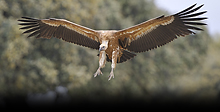
Covering an area of approximately 10 × 30 kilometres, it supports the most significant concentrations of the Spanish imperial eagle and the black vulture. In addition, griffon vultures breed on the steep rock faces throughout the park. Surrounding the National Park is a large zone with UNESCO Biosphere Reserve status, which makes a major contribution to the natural and cultural value of Extremadura.
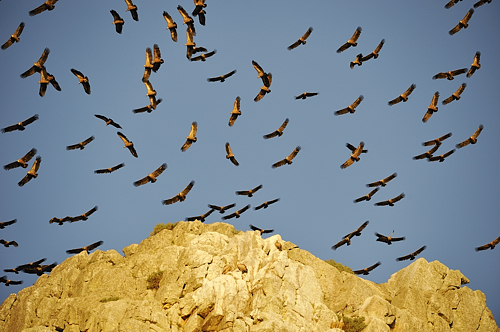
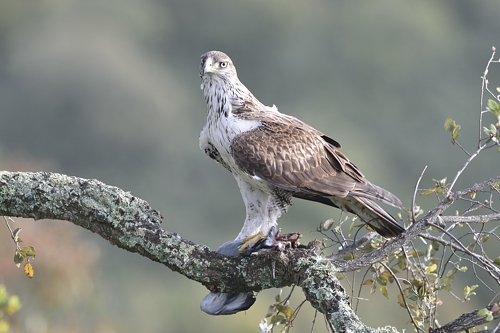
Other species such as booted eagle, Bonelli’s eagle, golden eagle and short-toed eagle also find a safe haven in Monfragüe National Park.
To give an idea of the numbers of birds of prey breeding in and around the Monfragüe area, the following figures apply:
griffon vulture 500 pairs, black vulture 300 pairs, Egyptian vulture 20 pairs, Spanish imperial eagle 10 pairs, golden eagle 12 pairs, booted eagle 20 pairs, short-toed eagle 20 pairs, Bonelli’s eagle 7 pairs, Eurasian eagle-owl 15 pairs, black kite 160 pairs, red kite 75 pairs, and black-winged kite 5 pairs.
(Source: SEO/BirdLife breeding bird census, 2008–2014.)
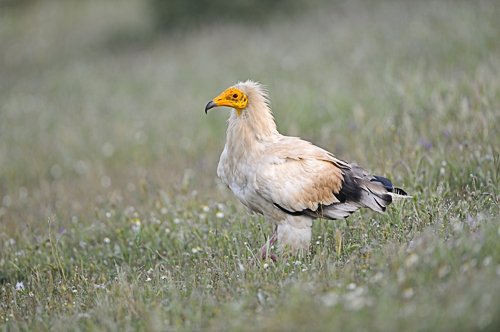
Monfragüe National Park is largely closed to the general public, but along the route that runs through the park all bird species can be observed. The most famous viewpoint is the rock known as Peña Falcon (with parking facilities), where the Tagus cuts through the Sierra de las Corchuelas. Peña Falcon is also known as Salto del Gitano, although these are in fact two distinct rock formations.
From the Monfragüe Castle, which rises above Peña Falcon, you have spectacular views over the surrounding landscape.